


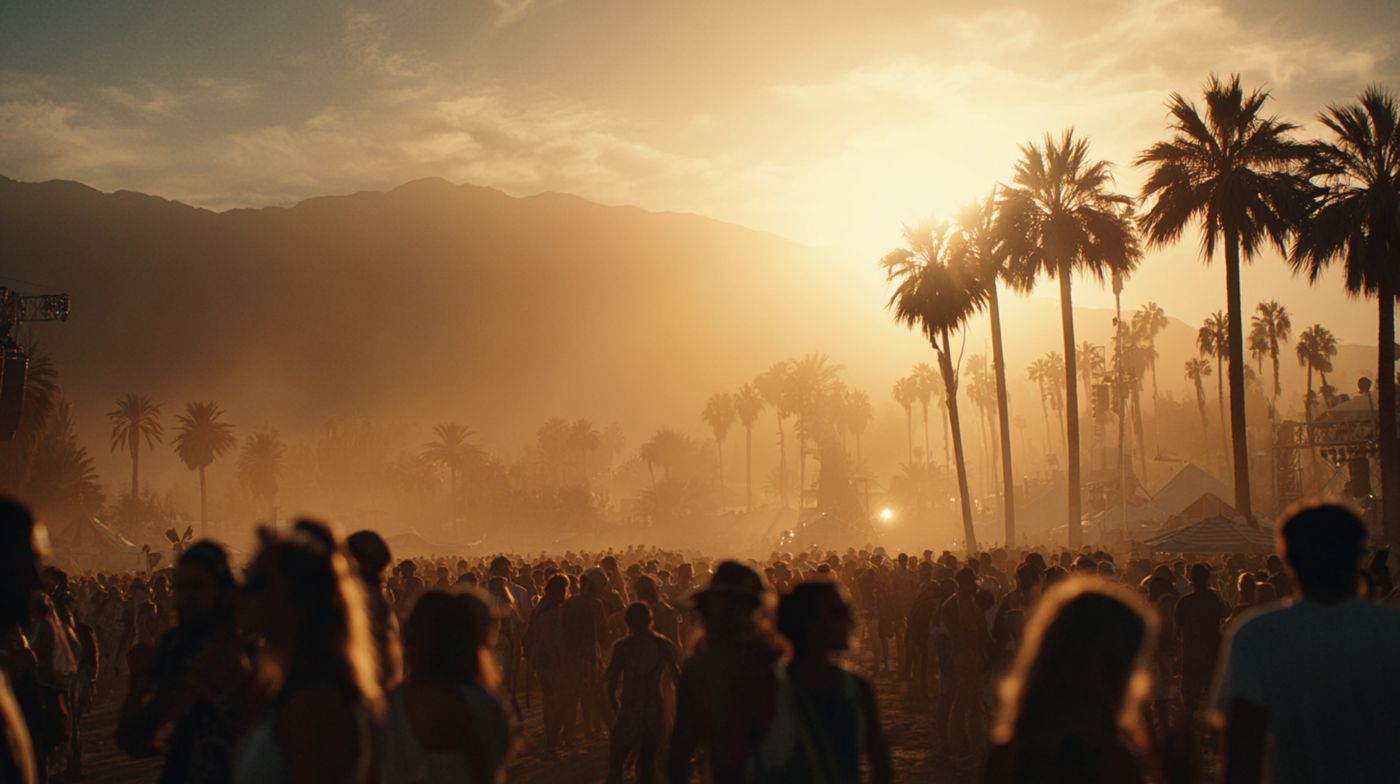
We are in Palm Springs and we love the Coachella Music Festival. Truly. The color, the art, the desert light at sunset, the way a crowd sways together when someone like Lana Del Rey or Tyler, the Creator or No Doubt takes the stage again after years away. It is creative and electric and joyful. And also, if we are honest, it carries a bit of a reputation. Namely the fact that there are drugs at Coachella.
Sometimes where there is smoke, there is fire. Festivals like this don’t just draw music lovers. They draw experimentation. They draw risk.
They draw people who believe, for a weekend, that normal rules have been gently set down in the sand with their sandals. And that is where parents start to feel uneasy, even if they can’t quite put words to why.
Common Drugs at Coachella
The most common substances at large music festivals tend to be what people call “party drugs.” MDMA (often called molly or ecstasy) is very common because it heightens emotion, music, and connection. Ketamine has become more prevalent in recent years for its dissociative, floaty effect. Cocaine is still widely used.
Psychedelics like mushrooms or LSD appear as well. Alcohol, of course, is everywhere and often mixed with these substances. The problem is not just the drugs themselves (though that is a problem). The problem is the environment. The drugs at Coachella are taken in the heat. Dehydration. Long hours. Crowds. Little sleep.
And increasingly, the risk that any of these substances may be contaminated with fentanyl or other synthetic additives that the person taking them never intended to ingest.

The Particular Dangers of Festival Drug Use
What makes festival drug use uniquely dangerous is the stacking of stressors on the body and brain. MDMA raises body temperature and depletes serotonin. Ketamine impairs awareness and coordination.
Cocaine pushes the heart into overdrive. Add 95-degree desert heat, minimal water, dancing for hours, and very little rest, and you have a body under enormous strain.
People often don’t realize they are in trouble until they are very much in trouble. Overheating, dehydration, confusion, panic, heart rhythm problems, and in some cases, overdose can happen faster than expected. And because people are in a crowd, it can take time before anyone realizes someone needs help.
What Happens If Someone Overdoses at Coachella
Large festivals like Coachella do have medical tents, roaming medical staff, and emergency response teams. There are safety measures in place. There are paramedics. There are hydration stations. There are people watching carefully.
But here is the honest part: those resources depend on someone recognizing a problem and seeking help quickly.
Many people hesitate because they are afraid of getting in trouble or embarrassing themselves. That delay is often what turns a medical scare into a medical emergency.
The safety net exists, but it works best when people use it immediately.
How to Talk to Your Child Before They Go
This is where many parents feel awkward, because they don’t want to accuse, but they don’t want to ignore. The most helpful conversations are not lectures. They are calm, practical, and rooted in concern rather than suspicion.
You are not saying, “Don’t you dare.” You are saying, “I care about you enough to be real with you.” You can talk about drugs at Coachella and what actually happens at festivals, what the risks are, how drugs affect the body in heat, and how quickly situations can escalate.
You can talk about watching out for friends, drinking water, and knowing where the medical tents are. You can say plainly that you would rather they call you for help than hide a problem out of fear.
That kind of conversation does not push kids away. It often makes them feel steadier.
- Stay factual, not dramatic
- Emphasize safety, not punishment
- Talk about heat, hydration, and mixing substances
- Encourage them to look out for their friends and themselves
- Make it clear they can call you if something goes wrong
When They Come Home and Something Feels “Off”
Sometimes the real concern begins after the festival. Mood swings. Anxiety. Depression. Not sleeping. Acting different.
This is often the aftermath of serotonin depletion from MDMA, exhaustion, dehydration, or the emotional crash that follows an intense weekend.
For some people, it passes in a few days. For others, it reveals something deeper—an early pattern of substance use, a vulnerability to addiction, or a mental health struggle that was already there and just got stirred up.
About Drug Treatment Near Coachella
This is where outpatient care can make a quiet, meaningful difference. Not as a punishment. Not as a dramatic intervention. But as a place to sort out what happened, restore physical and emotional balance, and talk honestly about substance use before it becomes something larger.
Evening outpatient options allow young adults and teens to keep living their lives while getting real support, education, and guidance in a calm, structured setting.
Palm Springs Addiction Treatment Center
If you are in the Palm Springs area and your child went to Coachella and came back different, or you simply want guidance on how to navigate these conversations, you do not have to figure it out alone.
SolutionPoint Behavioral Health offers compassionate, practical addiction and mental health support, including evening outpatient programs that meet people where they are without turning their life upside down.
Call SolutionPoint Behavioral Health at 833-773-3869.
Sometimes the first step is simply asking, “Can we talk about this?”
This article has been clinically reviewed by Dr. Sean Barlow.